

















返回列表
基于光谱分析和化学分析相结合的小样本蝗虫年龄识别方法
农业监测
2026/09/21
摘要:蝗虫是世界主要害虫之一,给经济造成了巨大的损失,对其进行有效监测至关重要。蝗虫年龄识别是舆情监测的 重要组成部分。目前,蝗虫监测主要采用人工调查、可见光图像处理、诱捕等方法,这些方法受环境和成本影响较大, 且存在一定的局限性。本文提出了一种基于光谱分析和化学分析的小样本蝗虫年龄识别方法。试验中首先对 180 群蝗虫 ((包括3龄幼虫、5龄幼虫和成虫)进行高光谱扫描。利用ENVI软件进行数据处理,提取400~1 000nm波段感兴趣区域 ((DOI)的反射率数据。其次,对蝗虫体表物质化学成分进行提取分析,最终发现 2,4-二特丁基苯酚可以用来区分不同 年龄的蝗虫。并通过实验得到了3种不同年龄蝗虫体表物质中2,4-二特丁基苯酚的含量范围。最后,对180组光谱数据 和物质成分数据进行分析处理,建立两者之间的回归预测模型MLRSVR,该模型只需输入特征波段对应的光谱数据,就 能预测出蝗虫体表 2,4-二特丁基苯酚的含量,从而根据成分含量的年龄范围识别蝗虫的年龄。试验表明,在特征波段 744nm、820nm、830nm、885nm 的光谱数据下构建的回归预测模型 MLRSVR 具有良好的效果,其中 R2 达到 0.97,与 400~1000nm处理的光谱数据相比,数据量大大减少,模型的运算速度加快。另外,3种不同年龄蝗虫体表2,4-二叔丁基 苯酚含量的变化范围分别为(( 0.16,0.27)、(0.34,0.91)、(1.1,2.1),因此,模型MLRSVR具有良好的学习能力和小样 本数据的预测能力。本研究为蝗虫的野外监测提供了一定的帮助,也为其他昆虫的监测提供了一定的借鉴。
关键词:蝗虫 光谱 化学计量学 识别 支持向量机
期刊:Computers and Electronics in Agriculture
DOI:https://DOI.org/10.1016/j.compag.2019.04.036
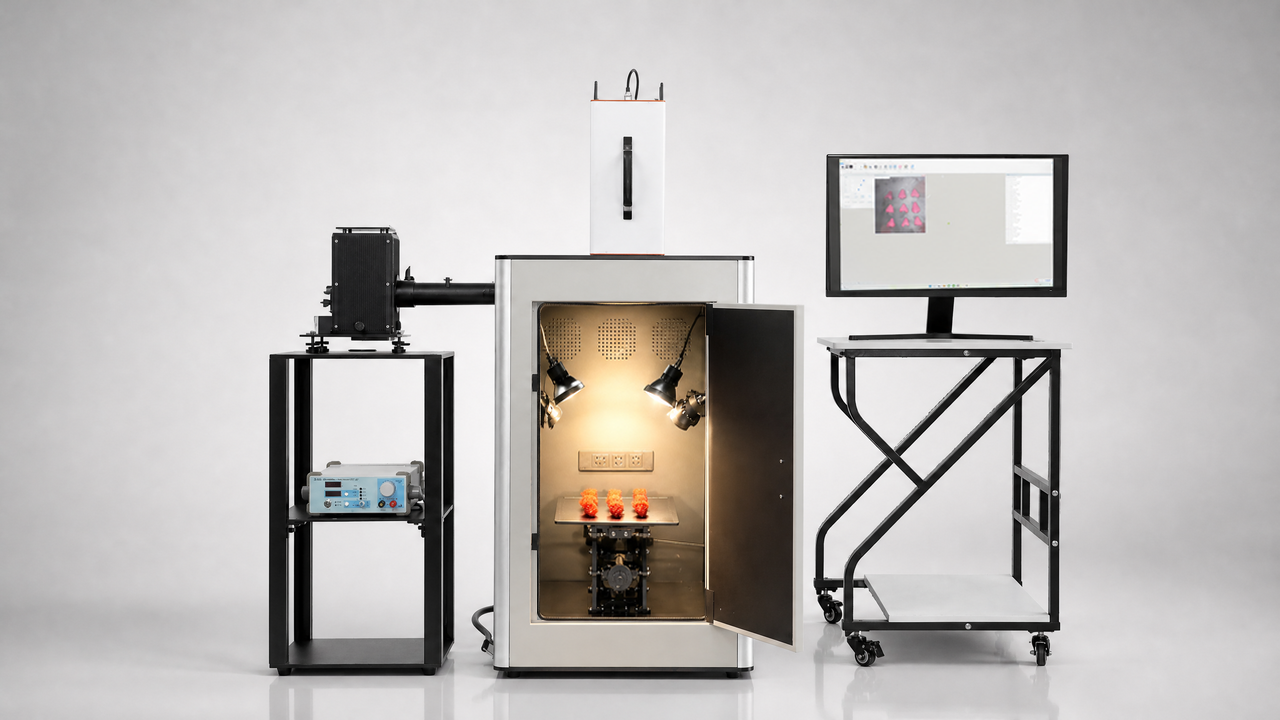
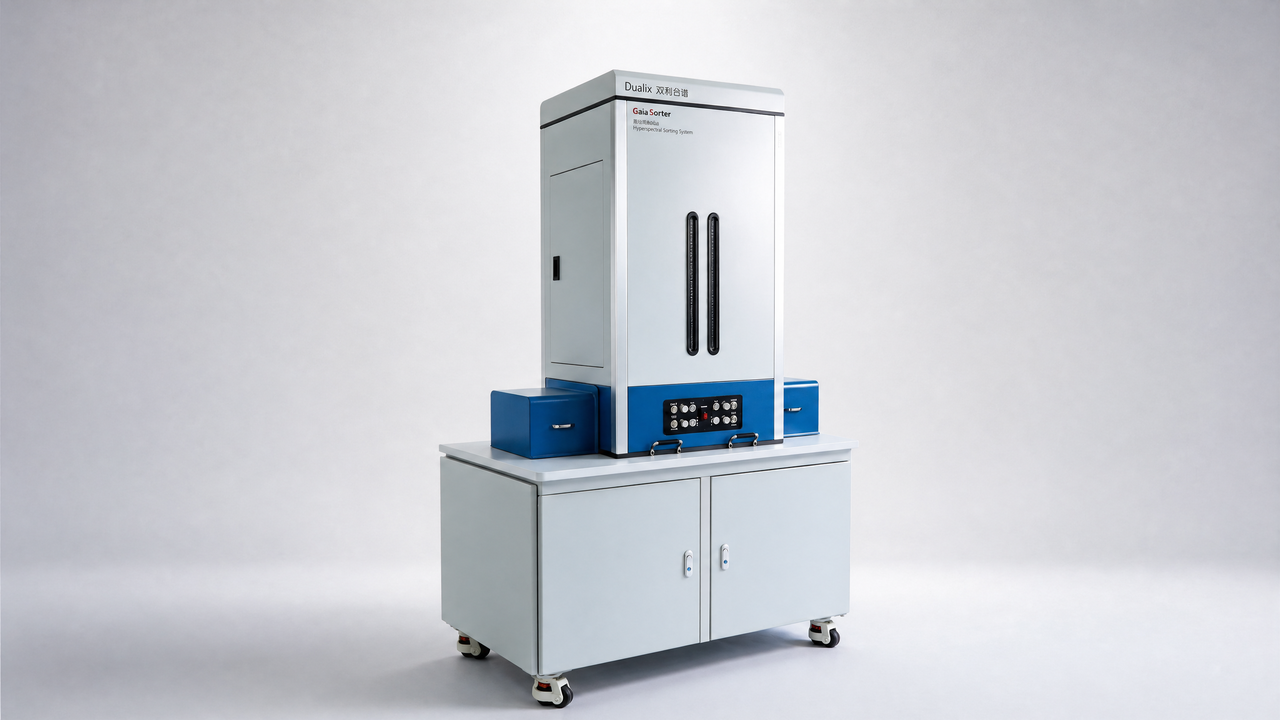
设备:GaiaSorter
A method for recognition of locust age with few observations based on spectral analysis combined with chemical analysis
Abstract:Locusts are one of the major pests in the world, causing huge losses to the economy, so it is very important to monitor them effectively. The age recognition of locusts is an important part of public opinion monitoring. At present, manual investigation, the visible-light image processing, and trapping methods are mainly used for monitoring. These methods are highly influenced by the environment and cost and have some limitations. In this paper, a method of recognizing the age of locusts in small samples based on spectral analysis and chemical analysis was proposed. Firstly, the hyperspectral scanning of 180 group locusts (including the 3rd age larva of locust, the 5th age larva of locust and the adult of locust) was carried out during the experiment. The data processing was performed by The Environment for Visualizing Images (ENVI) soft to extract the reflectivity data of the region of interest (DOI) in 400–1000nm band. Secondly, we extracted and analyzed the chemical com position of the surface material of locusts, and finally found 2,4-ditert-butylphenol which can be used to dis tinguish different age locusts. We also obtained the content range of 2,4-ditert-butylphenol in the surface sub stances of three different age locusts through experiments. Finally, 180 sets of spectral data and material composition data were analyzed and processed to build a regression prediction model named MLRSVR between them. The model only needs to input the corresponding spectral data of characteristic bands to predict the content of 2,4- ditert-butylphenol on the locust body surface, so as to recognize the age of locust according to the age range of the composition content. The experiment in this paper shows that the regression prediction model MLRSVRconstructed under the spectral data of the characteristic bands of 744nm, 820nm, 830nm, and 885nm has a good effect, in which R2 reaches 0.97. Compared with the spectral data processed in 400–1000nm, the data amount is greatly reduced and the computing speed of the model is accelerated. In addition, the range of 2,4-ditert-butylphenol content on the body surface of three different age locusts was (0.16, 0.27), (0.34, 0.91), (1.1, 2.1), respectively. Therefore, the model MLRSVR has excellent learning ability and prediction ability of small sample data. This study provides some help for the monitoring of locusts in the field and some reference for the monitoring of other insects.
Keywords:Locust Spectroscopy Chemometrics Recognition Support vector machine